
I am fully aware that if ten horror fans read this list, at least nine of them are going to disagree with me.
And that’s okay.
Horror is one of those genres where everyone’s favourites are completely different. Some people love slashers. Some love supernatural horror. Some enjoy psychological horror. Some apparently enjoy watching two hours of torture and calling it a good time.
This list isn’t based on which films are objectively the best.
It’s simply a collection of horror films that I love, rewatch, think about constantly or recommend to anyone willing to listen.
In absolutely no particular order, here are some of my favourite horror films of all time.
IT (2017)
Most people remember IT for Pennywise, the balloons and the jump scares. For me, the reason I love it so much is because it isn’t really a film about a clown at all.
At its core, IT is a story about childhood.
Every member of the Losers’ Club is dealing with something painful. Abuse, bullying, grief, neglect, loneliness, fear. Pennywise simply becomes the physical embodiment of those fears. He doesn’t create them. He exploits what is already there.
That’s what makes him so effective as a villain.
The film understands that being a child can be terrifying. Not because of monsters hiding under your bed, but because the adults around you don’t always protect you the way they’re supposed to.
Yet despite all of that darkness, IT is also strangely hopeful.
The friendships between the Losers’ Club are the heart of the entire film. They’re awkward, funny, annoying and fiercely loyal to one another. Their bond is what allows them to face something that should be impossible to defeat.
The older I get, the less I find myself focusing on Pennywise and the more I find myself missing the feeling of childhood friendships that felt like they would last forever.
Pennywise is one of my favourite horror villains because he’s genuinely unsettling without relying entirely on jump scares.
Also, I feel obligated to admit that I have a slight crush on Bill Skarsgård.
Fortunately, that crush does not extend to the child-eating clown.
Important distinction.
Pearl
What makes Pearl so fascinating is that she’s simultaneously the villain and the victim of her own story. Throughout the film, all Pearl wants is to be special.
She wants to be seen. She wants to escape the life she’s trapped in. She wants somebody to tell her that she’s destined for something bigger.
And honestly, that’s a very human desire. The uncomfortable part is watching those desires slowly twist into obsession.
As the film progresses, Pearl becomes increasingly isolated from reality. She develops this idealised version of the life she believes she deserves, and every obstacle in her way becomes something she feels justified in removing.
What I love about the film is that it never presents Pearl as a cartoonishly evil character.
She’s lonely. She’s frustrated. She’s desperate.
At times she’s even relatable. And that’s exactly what makes her so frightening.
Some of the most terrifying horror villains aren’t monsters. They’re people.
Pearl forces us to watch somebody’s disappointment, loneliness and resentment slowly rot into something dangerous.
By the time the credits roll, the horror isn’t really coming from what Pearl has done.
It’s from understanding why she did it.
It Follows
One of the reasons It Follows has stayed with me for so long is because the monster itself can mean so many different things.
Some people interpret it as a metaphor for sexually transmitted infections. Others see it as a metaphor for trauma. Some view it as a representation of anxiety itself.
Personally, I’ve always seen it as a symbol of the things in life we can’t escape. No matter how far you run, no matter how much you distract yourself, eventually certain fears catch up with you.
Grief. Growing older. Death. Loss. Regret.
The creature in It Follows never sprints, it just keeps walking without distraction. And somehow that feels more frightening than most horror villains who spend the entire film screaming and chasing people.
The idea that something is always moving towards you, even when you can’t see it, taps into a very primal fear that most people carry somewhere deep down.
That’s why the film works so well.
The monster isn’t just chasing the characters.
It’s chasing all of us.
Mama
I think Mama is one of the most misunderstood horror films I’ve ever watched.
A lot of people remember it as the film with the creepy ghost woman crawling around in the background and appearing in dark corners. And yes, Mama is genuinely unsettling.
But underneath all of that, Mama is actually a deeply tragic story. At its heart, the film isn’t really about a ghost, it’s about motherhood.
The two young girls at the centre of the story have spent years isolated from the world, raised by a spirit who genuinely believes she is their mother. Mama isn’t haunting them because she wants to hurt them. She’s haunting them because she loves them.
That’s what makes her so different from many horror villains.
She’s not driven by revenge or hatred. She’s driven by attachment. By grief. By an overwhelming need to hold onto the only family she’s ever known.
The more we learn about Mama’s past, the sadder her story becomes. She lost her own child in life, and that loss followed her into death. Everything she does throughout the film stems from that pain. She sees the girls as hers, and the thought of losing them again becomes unbearable.
What I love about the film is that nobody is entirely wrong.
The girls need a normal life, they need safety, they need a future. But Mama’s love for them is real too, even if it’s twisted and unhealthy. That creates a conflict that feels surprisingly emotional for a horror film. By the end, I wasn’t just scared of Mama.
I felt sorry for her.
In many ways, Mama is a story about what happens when love becomes possessive. When grief becomes impossible to let go of. When someone’s entire existence revolves around holding onto something they should have released long ago.
The final scenes are heartbreaking because there isn’t really a happy ending for anyone involved. Everyone loses something. And I think that’s why the film has stayed with me for so many years.
Scream VI
I know this might be controversial, but Scream VI gave me one of my favourite opening scenes in the entire franchise. One thing I’ve always loved about Scream is that the opening scene is practically its own event. Every film tries to surprise the audience in some way, and by the sixth movie you’d think it would be impossible to do something genuinely unexpected.
And then Scream VI somehow managed it.
The moment Ghostface removes the mask and reveals his identity, I remember thinking, “Wait… we’re doing this now?”
For a few glorious minutes, the film completely convinces you that it’s about to break every rule the franchise has established. It feels fresh, unpredictable and genuinely exciting. Even though the story eventually takes another turn, that opening remains one of the boldest things the series has ever done.
The Core Four genuinely feel like friends. They annoy each other, protect each other and bicker with each other in ways that feel believable. Their relationships give the film emotional stakes beyond simply asking who will survive.
And then we have the Bailey family.
Honestly? I loved the reveal. A lot of horror villains kill because they’re obsessed, angry or simply evil. The Bailey family murders feel different because they’re fuelled by grief. Twisted grief, admittedly, but grief nonetheless.
The idea that three family members would completely destroy their own lives in pursuit of revenge is fascinating because, in their minds, they’re not the villains.
Of course, the irony is that Richie wasn’t exactly an innocent victim. The family spends the entire film treating him like a misunderstood angel while conveniently forgetting that he was, you know… a serial killer.
Also, the subway scene took approximately ten years off my life.
I have nothing deeper to add to that.
Spree
When I first watched it, I thought it was funny. Then uncomfortable. Then terrifying. Then somehow all three at the same time.
He’s just a guy who desperately wants people to notice him. And in a world obsessed with followers, views and internet fame, that’s a surprisingly relatable starting point. The scary part is watching that desire slowly mutate into something dangerous.
Kurt genuinely believes he’s destined to be famous. He believes the world owes him attention. Every rejection, every failed livestream and every awkward interaction only pushes him further into his obsession.
What I find most interesting is that the film isn’t really mocking social media. It’s criticising the unhealthy relationship some people develop with it.
The idea that your worth is determined by numbers.
That fame automatically equals happiness.
That attention is the same thing as connection.
Spree is about loneliness, desperation and the dangerous things people can become when they’re willing to sacrifice everything just to be seen.
The fact that it feels even more relevant today than when it was released is honestly quite scary.
Black Phone
The Black Phone is one of those films that completely caught me off guard. I went into it expecting a decent horror film and ended up finding something that was so much more emotional than I expected.
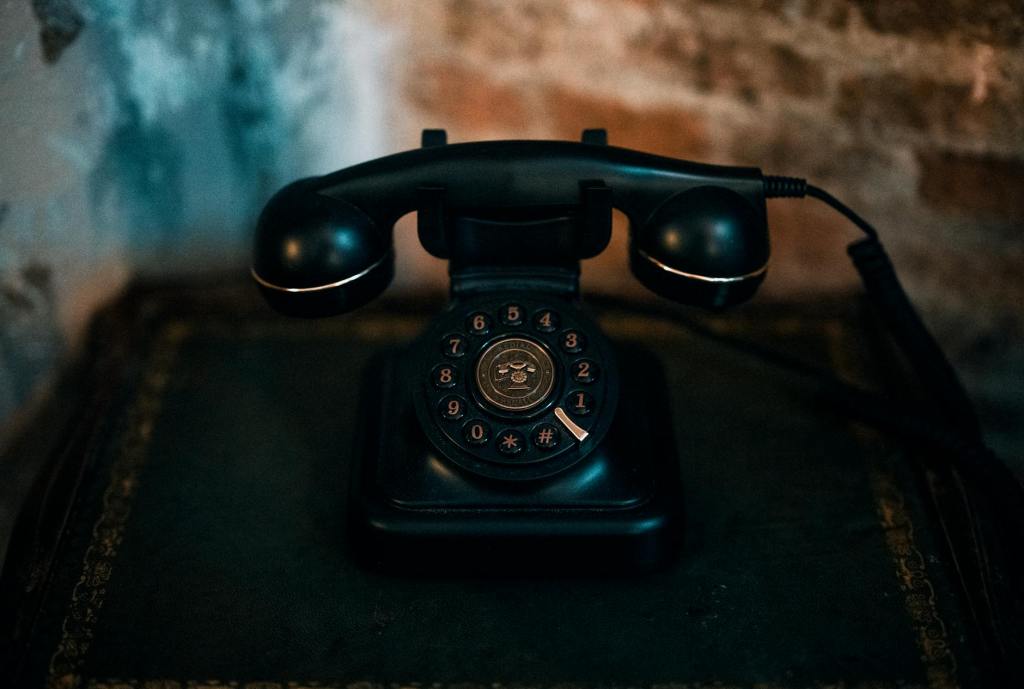
On paper, the story is terrifying. A young boy named Finney is kidnapped by a serial killer known as The Grabber and trapped inside a soundproof basement. The only thing in the room is an old black telephone that shouldn’t even work.
What I love about The Black Phone is that it never feels like it’s trying too hard. It doesn’t rely on constant jump scares or endless gore to keep your attention. Instead, it focuses on the characters and the growing feeling of dread as Finney tries to figure out how he’s going to survive.
The phone calls themselves are probably my favourite part of the entire film. Each call comes from one of The Grabber’s previous victims. Boys who never escaped. Boys whose stories should have ended in that basement.
But instead of simply becoming victims, they become the reason Finney survives. There’s something surprisingly beautiful about that idea. Even after everything they’ve been through, they’re still trying to help someone else make it out.
I also think Ethan Hawke is incredible as The Grabber.
A lot of horror villains spend their films screaming, chasing people or making dramatic speeches. The Grabber doesn’t need to. He’s actually at his scariest when he’s being quiet.
You never quite know what he’s thinking or what he’s going to do next, which makes every scene with him feel tense.
And can we talk about that mask? Whoever designed it deserves both a raise and a wellness check. I genuinely think it’s one of the creepiest horror masks ever created.
 The Everything Journal
Leave a comment