I keep seeing AI everywhere.
AI adverts. AI influencers. AI-generated people selling products. AI short films. AI videos where nobody on screen is actually real.
And every time I see one, I can’t help thinking the same thing:
Where does this end?
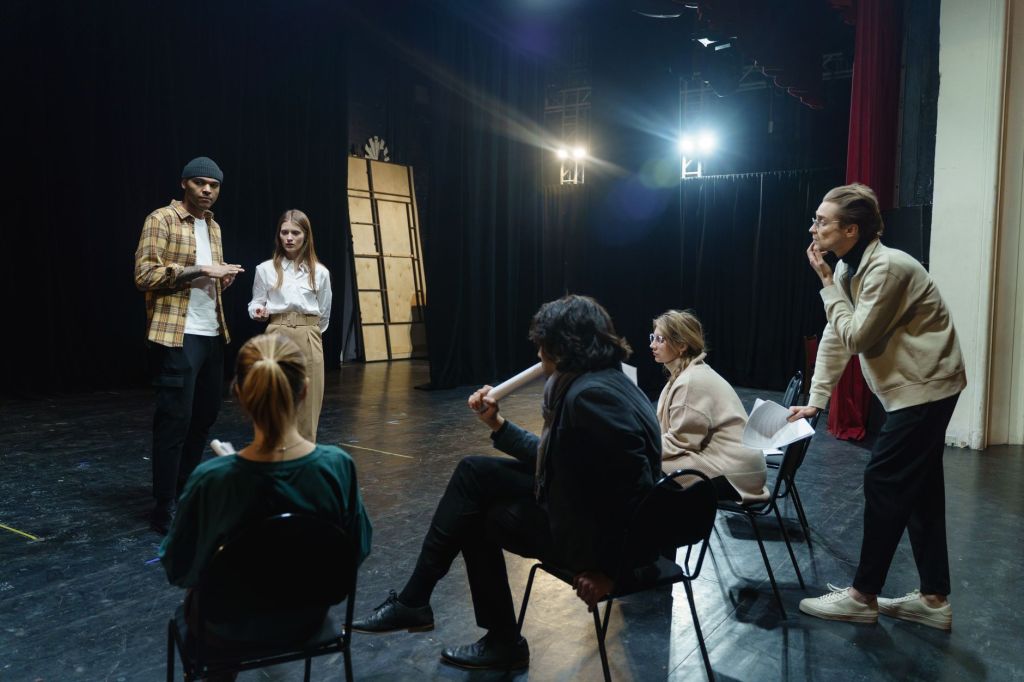
Because there are so many real actors out there desperate for work. People training, auditioning, building showreels, applying for roles, trying to get a foot in the door. People who would give anything to be cast in an advert, a short film, a music video, a tiny speaking role, literally anything.
And yet, increasingly, companies seem to be looking at human performers and asking, “Could we just generate this instead?”
That is a terrifying thought.
Acting is already an incredibly difficult industry. There are more actors than there are jobs. Even talented people can spend years trying to get noticed. Many actors work other jobs while chasing opportunities that may or may not come.
So when AI starts appearing in spaces where actors could have been hired, it feels personal.
An AI person in an advert isn’t just a “clever” piece of technology. It’s also a role a real person didn’t get. A face that wasn’t paid. A performer who wasn’t booked. A human being replaced before they even had the chance to audition.
Part of the appeal for companies is obvious. AI doesn’t need breaks. It doesn’t need travel costs. It doesn’t get tired. It doesn’t need confidence on camera. It doesn’t ask questions. It doesn’t need to be paid in the same way a real performer does.
From a business perspective, that probably sounds convenient.
From an actor’s perspective, it sounds like a nightmare. Because acting has never been an easy career to enter, and now performers are being asked to compete not only with other human beings, but with technology that can create a face, a voice and a performance in seconds.
But acting is more than looking human. This is where I think the conversation becomes more complicated. AI can create a person who looks real. It can imitate facial expressions. It can generate voices. It can produce something that resembles performance.
But acting isn’t just appearing human on screen.
Acting is choice. Emotion. Instinct. Timing. Chemistry.
The tiny pause before a character answers. The way someone’s face changes when they’re trying not to cry. The awkward laugh that wasn’t scripted. The tension between two actors in a scene. The feeling that a real person is living inside the moment.
AI can copy the surface of performance, but I don’t think it can truly understand what it means to perform. Not in the way humans do.
However, that doesn’t mean actors have nothing to worry about. Because unfortunately, not every company is looking for depth. Some just want cheap content. Some just want something quick for social media. And in those spaces, AI could absolutely take opportunities away from real actors.
That is the part that worries me most.
Not necessarily that AI will replace leading actors in emotional films overnight, but that it will quietly eat away at the smaller jobs. The little projects that help actors build experience. And those jobs matter.
Not every actor starts with a major TV role. Most people begin with small parts, local projects, student films, online adverts, short films or background work.
If AI takes those away, how are new actors supposed to get started?
I don’t think actors will disappear completely. People still crave human connection. We still love watching real performances. We still become attached to actors, not just characters. We care about their interviews, their chemistry, their choices, their careers and the humanity they bring to a role.
AI might be able to generate a face. But it can’t have lived a life. It can’t understand heartbreak. It can’t know what it feels like to be embarrassed, grieving, furious, jealous, terrified or in love.
It can imitate those things. But imitation is not the same as experience.
That matters.
At least, I hope it does.
I don’t think the biggest danger is AI becoming better than actors. I think the danger is companies deciding that “good enough” is enough.
Good enough for an advert. Good enough for a background character. Good enough for a cheap video. Good enough for content people scroll past in five seconds.
That’s where the damage could happen. Not because AI creates better performances, but because it creates cheaper ones. And in an industry already full of people fighting for opportunities, cheaper can be very dangerous.
A real actor brings something unpredictable to a role. They bring their own history, emotions, body language and instincts. They make choices that surprise directors. They connect with other performers. They turn words on a page into something alive.
Some of the best moments in film and television happen because an actor brings something nobody planned. That human unpredictability is part of the magic. Without it, everything risks becoming polished, empty and soulless.
So, will AI take over acting? I don’t think it will completely. But I do think it could take away opportunities if people aren’t careful.
And that matters, because behind every “small role” is someone hoping it might be their first step. Behind every advert is an actor who could have been paid. Behind every short film is a performer trying to build experience.
AI shouldn’t be allowed to replace human creativity simply because it’s cheaper and easier. Acting is not just a face on a screen, it’s someone choosing to step into a story and make us believe it.
And no matter how advanced AI becomes, I hope we never forget the value of a real person standing in front of a camera, trying to make us feel something.
 The Everything Journal
Leave a comment